
In the Mojave Desert, it was important to know not only the locations of major rivers but also where small quantities of groundwater emerged. The Chemehuevi remembered springs and seasonal watering places, traveled between them along familiar trails, and passed this knowledge to later generations.
A historical and ethnographic study submitted to the California Energy Commission in 2010 preserves information on how the Chemehuevi cared for small natural water sources. The material draws on research by Catherine Fowler and records of historical accounts.
Stones over a small spring
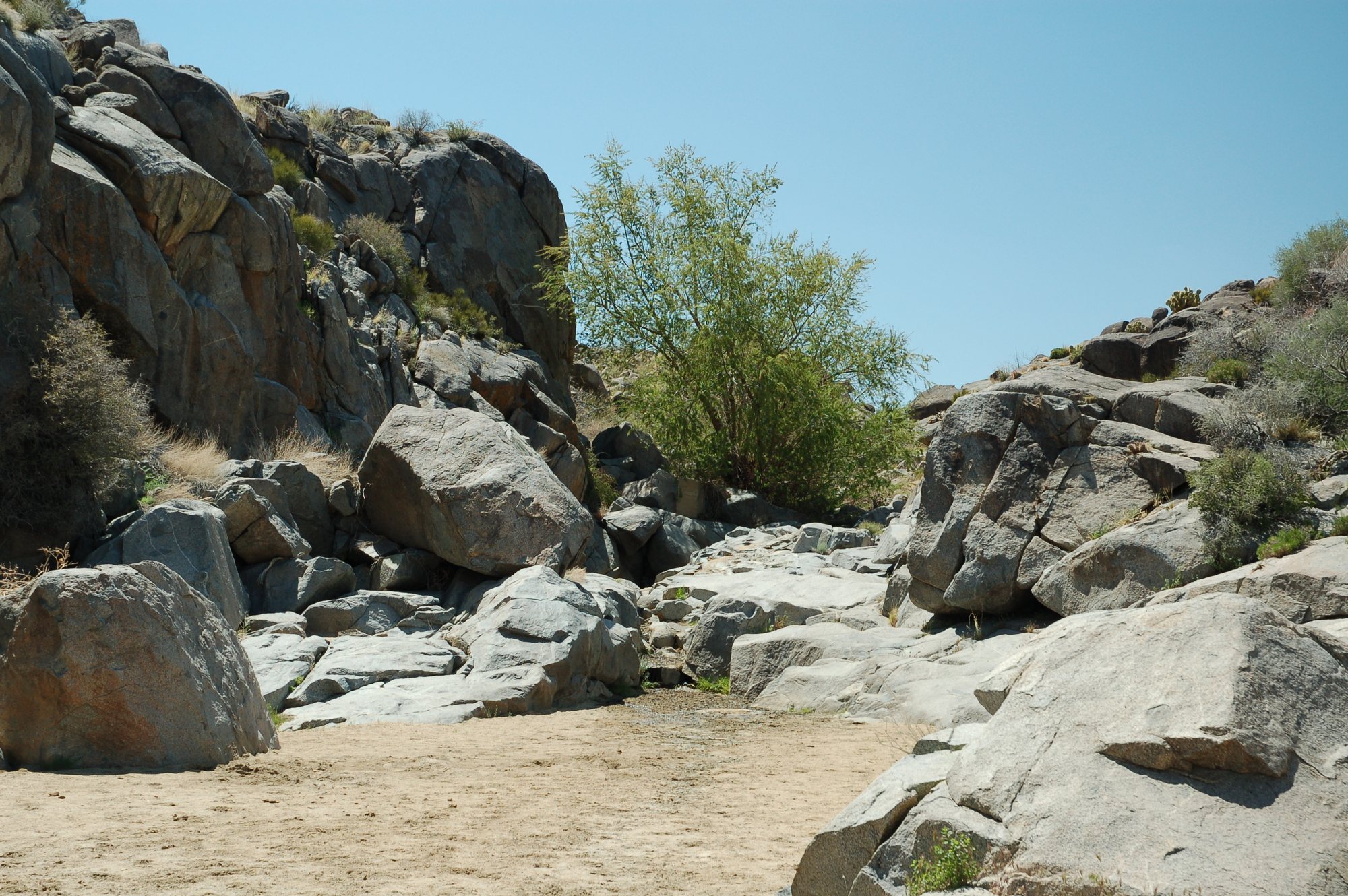
Some small springs were covered with stones at times. According to the explanation cited in the source, this protected the water from interference by animals and other people.
This was a matter of covering a natural point where water emerged, not constructing a large well. The research provides no measurements for the stones, number of layers, or precise laying pattern. The historical detail is the practice itself: small sources could be protected using material found close at hand.
Where the water trails ran
The Chemehuevi trail network connected the Colorado River with springs and natural rock reservoirs in the Mojave Mountains. Some sources held water all the time, while others depended on recent rainfall.
Families moving at a slower pace selected routes where watering stops were closer together. Fast messengers could follow more direct routes with greater distances between springs.
How water was carried
Matavium's account includes a description of water containers: they were carried inside a burden basket or carrying net. These objects helped people move a supply of water from one source to the next.
On reaching a watering place, travelers considered the journey still ahead. Planning a crossing was especially important where a seasonal reservoir might dry out between rains.
Who went to the springs
The historical research also states that women trained in scouting terrain and traveling along trails could go to distant springs to collect water during journeys. Knowing the route was part of everyday preparation for travel.
How protecting a spring differed from storing water
A spring covered with stones remained a natural watering place. A water vessel, by contrast, allowed someone to carry some of the water away. These were two distinct practices that could be combined on long journeys through the desert.
Historical source: SES Solar One — Cultural Resources, Data Request 102 (2010), section on Chemehuevi water sources and trails, citing Fowler (2004), Laird (1976), and Matavium — https://efiling.energy.ca.gov/GetDocument.aspx?DocumentContentId=47511&tn=55663.