
On June 5, 1903, Clinton Hart Merriam acquired a water bottle made from plant material by a Tachi Yokuts woman. She lived in a tule house at a settlement roughly seven miles southeast of Lemoore in Central California. Merriam recorded the vessel's name in his field notes as ah’ts or ah’ch.
The object has survived. It is now held by the University of California, Davis anthropology museum under inventory number CHM 873. The scholarly description records not only the bottle's dimensions but also details of its close plant-fiber weaving.
Dimensions and shape
The museum vessel is approximately 25 centimeters high and 19.5 centimeters in diameter. It has a rounded body and a relatively narrow neck. Unlike a large, open basket, this shape is convenient for carrying liquid.
What the bottle was made of
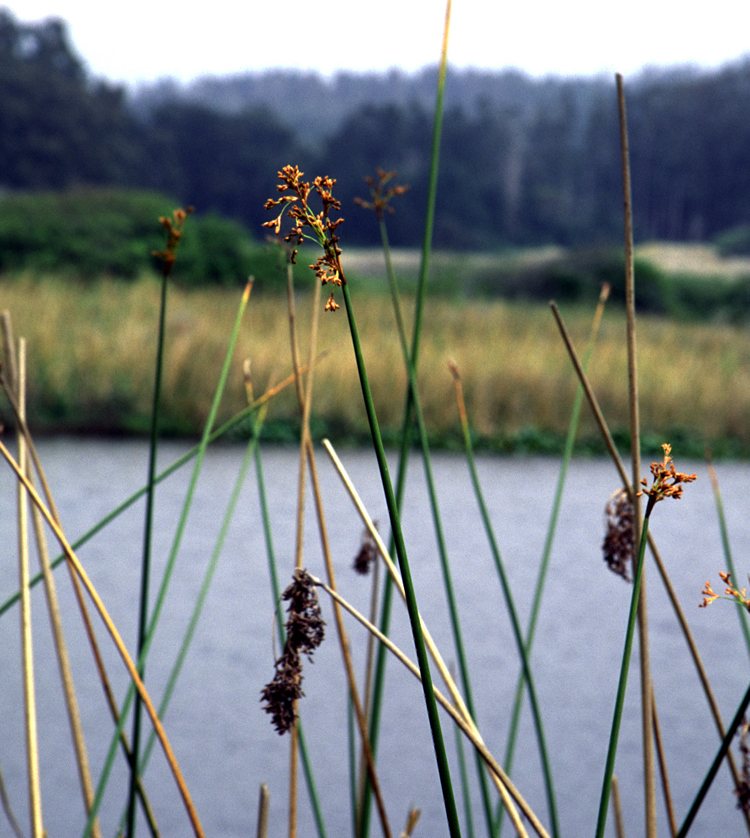
The main plant material was tule, which grew in the valley's wetlands. The museum describes a firm weave: the strands binding the plant-fiber foundation run diagonally. The walls were woven closely enough for the vessel to retain its shape.
One feature of this particular surviving specimen is important: it has no coating of pine resin.
How woven water bottles held liquid
The Tachi and other Plains Yokuts used different methods to reduce leakage from woven vessels. The museum describes two possibilities.
The first relied on the properties of tule: the container was soaked with water, causing the plant parts to swell and the spaces between them to become smaller.
In the second method, pine resin coated the surface of the bottle, filling the openings between fibers. But this treatment must not be attributed to every object: the surviving bottle CHM 873 has no resin coating.
Other possible uses
The museum notes that vessels without a resin coating were sometimes used for seeds as well. The surviving object therefore illustrates two potential uses of plant-fiber containers: holding dry provisions and retaining water in a woven vessel.
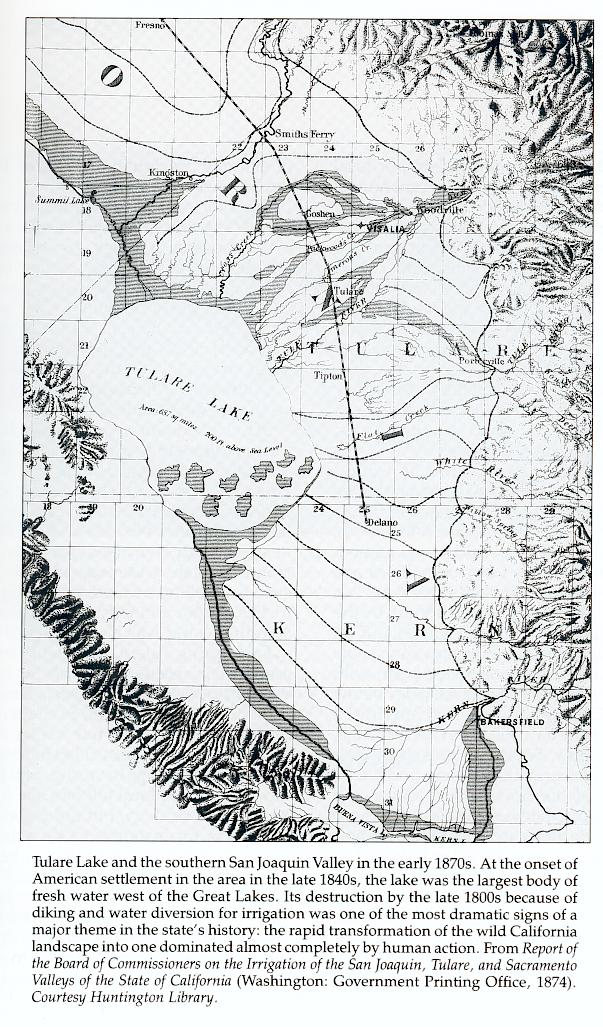
A tradition beside Tulare Lake
The valley around the lake supplied plentiful tule and other plants used in weaving. People made large mats, house coverings, baskets, and water bottles from them. These objects differed in form, but all reflected knowledge of the flexibility and strength of plant fibers.
The authentic vessel acquired in June 1903 preserves a particular shape, set of dimensions, and the old name ah’ch — a rare opportunity to compare a historical account with an actual object.
Sources: UC Davis Department of Anthropology Museum, “Tachi Yokuts Waterbottle” (2015) — https://anthromuseum.ucdavis.edu/news/july-16-2015-tachi-yokuts-waterbottle; C. Hart Merriam, Field Work Among Yokuts Tribes, 1902–1904, field record from 1903 — https://digicoll.lib.berkeley.edu/record/84252.