
In the hot Coachella Valley, mesquite trees grew near Desert Cahuilla settlements. People recognized the trees by their small paired leaflets, pale elongated flower clusters, and seed pods that ripened in summer. Mesquite provided food that could be prepared without a fire: ripe pods could be eaten fresh, while the pods themselves could be mixed with water to make a sweet drink.
The Augustine Band of Cahuilla Indians preserves its name, menyikish pishpakhatem. The tribe's historical account says that children especially enjoyed this drink.
Gathering mesquite
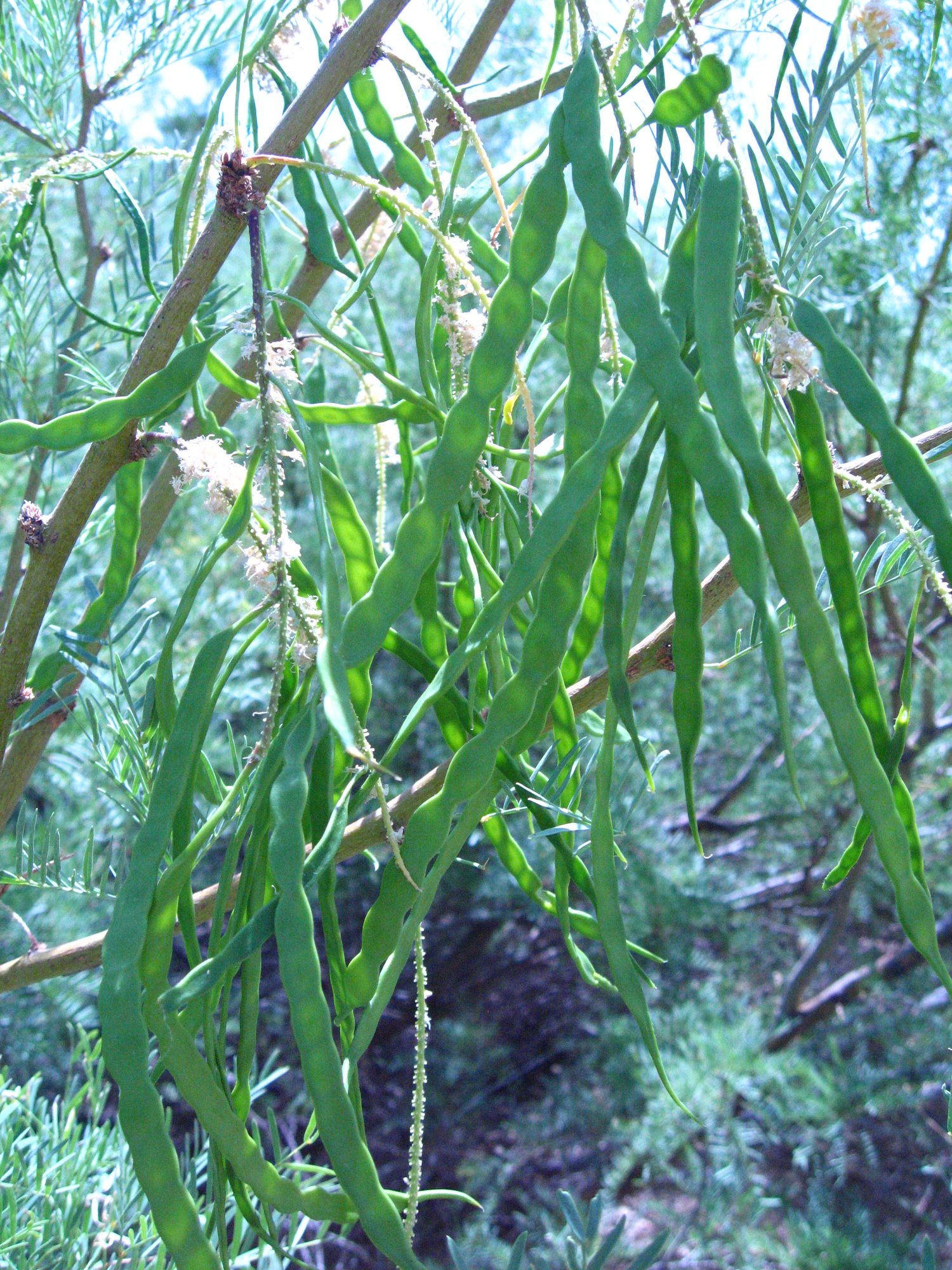
The flowers appeared in June. Long pods ripened on the trees in July and August. During the fruiting season, Cahuilla people gathered the sweet harvest to eat immediately, dry for later, or make into a drink.
How the pod drink was prepared
Ripe pods of honey mesquite were gathered.
The pods were crushed to release their sweet contents.
The crushed pods were mixed with water. The water absorbed their sweetness, producing a slightly thick drink.
The drink was consumed fresh. This method required neither fire nor cooking.
The same tradition included another drink, made from the tree's flowers. Gathered flower clusters were dried in the sun and then placed in water. This produced a refreshing liquid with a plant flavor, again without heating.
Mesquite was closely connected with Desert Cahuilla settlements. Historical accounts by researchers describe many villages located near dense mesquite groves. People knew when flowers appeared and when the pods began to ripen.
A photograph taken at the Oasis of Mara in Joshua Tree National Park shows the long pods of honey mesquite among its leaves. It depicts the plant material used by the Cahuilla to make menyikish.
Tribal source: Augustine Band of Cahuilla Indians, “History & Heritage,” “The Honey Mesquite Bean” — https://tribe.augustinetribe-nsn.gov/history-heritage/. Photograph: Robb Hannawacker, Joshua Tree National Park, 2007 — https://commons.wikimedia.org/wiki/File:Honey_Mesquite_(Prosopis_glandulosa)_beans;_Oasis_of_Mara.jpg.
