
The Nomlaki lived on the western side of the Sacramento Valley. Their settlements lay near streams and springs among the foothills of the Coast Ranges. An unusually precise account of how they used water in everyday life has survived.
In 1951, anthropologist Walter Goldschmidt published Nomlaki Ethnography, based on field interviews with Nomlaki descendants in the 1930s. Its section on water describes how a person drank directly beside a stream or spring.
Water at a natural source
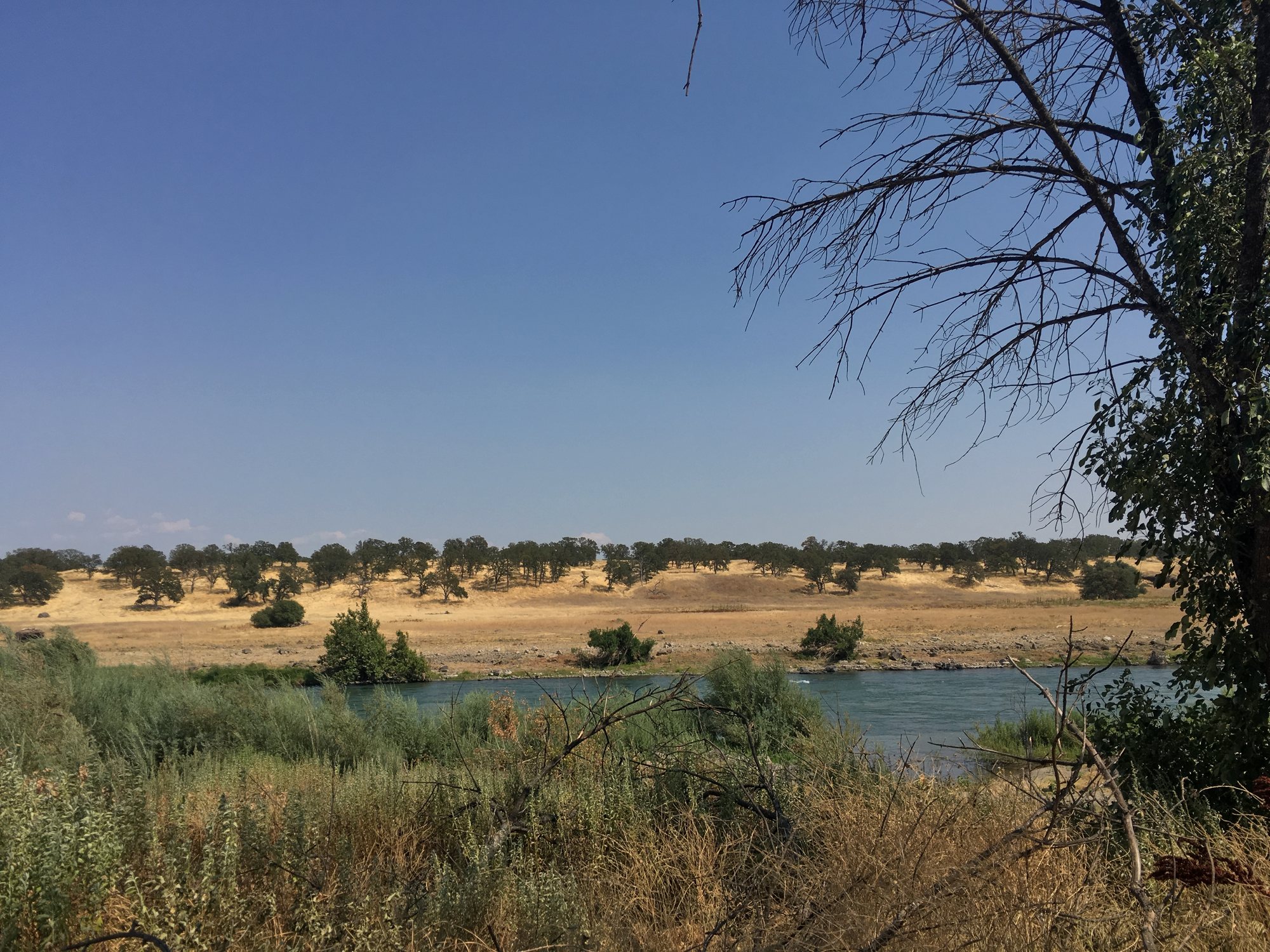
People came to flowing water or a spring to drink. A container was not always necessary: water could be lifted to the lips with the hand itself.
The movement of the hand
A person curved the palm into a small cup, lowered it to the water, and scooped up a little. The hand was then raised to the mouth, and the water was drunk from the palm.
Goldschmidt noted one detail in particular: people did not lower their faces all the way to the surface. They brought the water up to themselves instead of lowering their faces into the stream.
This simple method required neither a clay bowl, a wooden dipper, nor a woven vessel. For a few moments, the hand itself became a cup.
When people drank
The source describes ordinary drinking at a stream, but also records a separate custom associated with work. Some groups — for example, people out hunting or gathering seeds — might postpone drinking until the task was finished or until sunset. This was a particular practice, not a description of every everyday visit to a spring.
Where the Nomlaki lived
Their traditional territory lay west of the Sacramento River valley, between the areas of Stony Creek and Cottonwood Creek. Small waterways descended from the foothills toward the larger river. Settlements could stand close to springs and streams.
Nature supplied the water, and a cupped hand made it possible to drink without a separate vessel. That gesture, together with references to streams and springs, has been preserved in a twentieth-century record.
Historical source: Walter R. Goldschmidt, Nomlaki Ethnography (1951), “Water” section, printed pp. 411–412 — https://digicoll.lib.berkeley.edu/record/82970.