
In the Klamath River valley, manzanita was a familiar berry-bearing shrub. People gathered its fruit, dried it, and stored it for the time when the fresh harvest was no longer available. The Karuk also had another way of using these berries: they made a drink that required neither a fire nor boiling water.
The Karuk Tribe's own publication, Uxraah: Native Edible Berries, describes gathering the fruit, drying it in baskets, and making a drink with water.
Gathering the berries
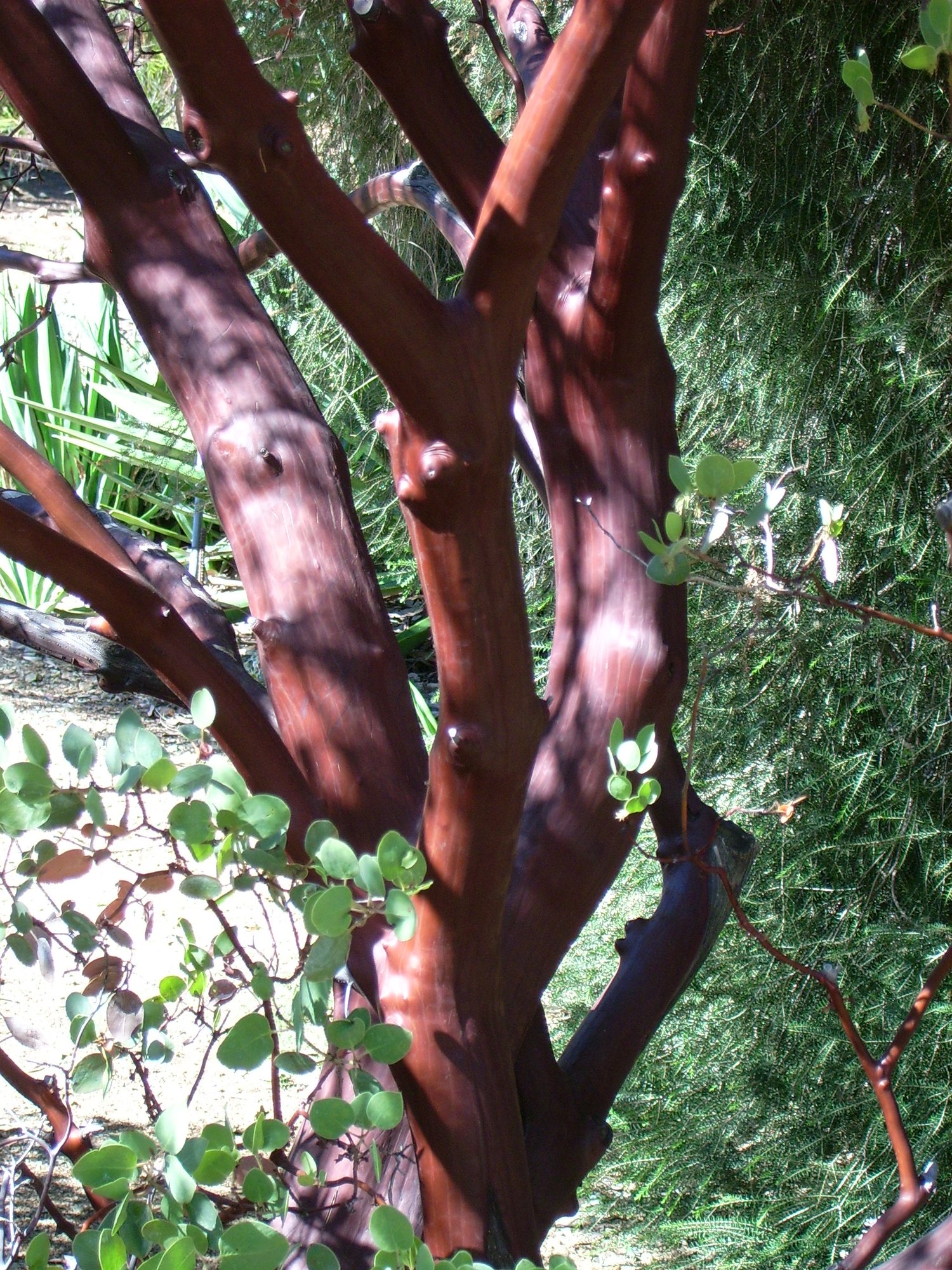
Manzanita fruits grow in small, rounded clusters among dense evergreen leaves. Ripe fruits could be picked from the branches, but historical accounts also preserve a shaking method: a basket was placed or a cloth spread beneath a shrub, and the berries were knocked from the branches.
Drying in the sun
The gathered berries were spread out in a flat woven basket called a muruk. There they dried in the sunshine. Another basket, a sípnuuk, was used for storage. Sun-drying meant that part of the harvest could be kept after the picking season.
How the drink was made
Gathered manzanita berries were taken for use.
The berries were placed in water and left to impart their flavor.
The liquid was separated from the fruit by straining the drink through a shallow, plate-shaped basket.
Another method was also known: water was allowed to pass through a layer of berries, gradually taking on their flavor.
The result was berry-flavored water with the distinctive taste of manzanita. No fire was used in this method.
The berries were also connected to the seasonal rhythm of life. They were gathered when ripe, dried in flat baskets, and later taken from storage. Preparing the drink required water and simple implements made from plants, of the kind already used in everyday life.
The entire preparation took place without fire: the berries imparted their flavor to the water, and a woven basket helped produce the finished drink.
Source: Karuk Tribe, Uxraah: Native Edible Berries (2016), “Manzanita berry” section — https://nctcc.org/wp-content/uploads/2017/05/G8L2NativeEdibleBerries_booklet.pdf.