
Southern California has dry summers and rainy winter months. In small valleys, water flowed through stream channels after rainfall, carrying soil particles downstream. The Kumeyaay knew how to influence this flow without concrete walls or pipes: they placed small groups of large stones in the streams.
This practice is described in a joint educational project by the Campo Kumeyaay Nation and the Smithsonian’s National Museum of the American Indian. It is known as a rock-drop — a stone barrier along the path of flowing water.
Why the stones were used
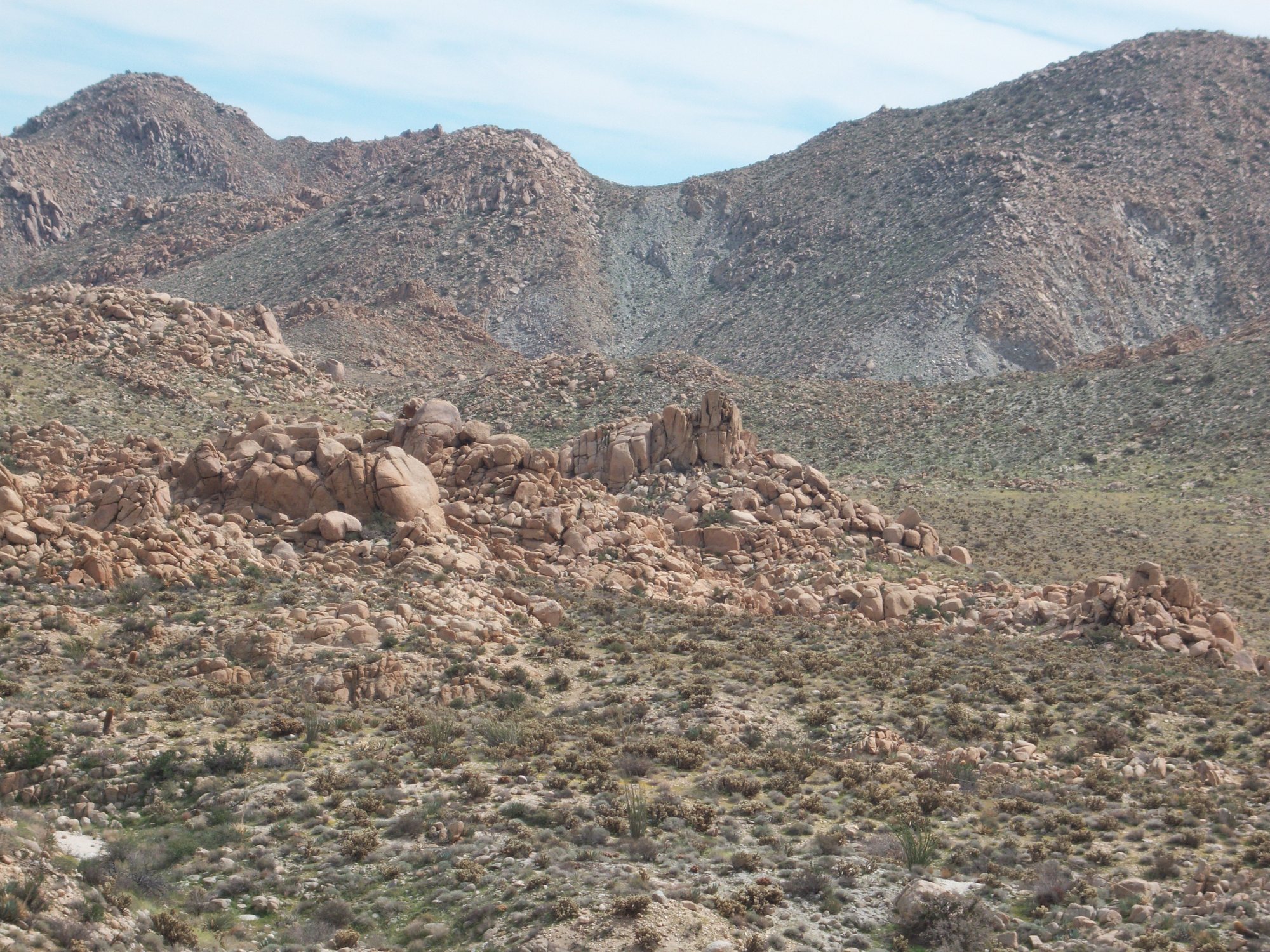
Large stones placed in a stream channel held back some of the soil carried by the current and helped reduce erosion along the banks. Water remained near the ground surface for longer. The area around the stones stayed wetter, making it easier for plants to grow and attracting animals.
The stony stream and its vegetation formed an interconnected system. Retaining moisture in the soil mattered beyond a single rainfall: it sustained living parts of the valley that depended on seasonal wet conditions.
What is known about the construction of a rock-drop
People chose a section of a stream through which water flowed during the rainy season.
They placed a group of large stones in the channel. The stones themselves are the documented component of the structure.
When runoff passed through, these stone obstacles changed the movement of water and reduced the amount of soil washed away.
Moisture remained nearby for longer, allowing plants to grow. Birds and other animals came to these places.
These are the basic documented elements of the practice, not an exact set of instructions from a particular builder. The source does not specify a required number or size of stones or the order in which individual stones were laid.
Who chose the locations
The historical Kumeyaay account mentions the kuseyaay — people with specialized knowledge of their environment. They gave advice, including about where to place rock-drops. Such decisions formed part of broader knowledge about rainfall, stream channels, and vegetation.
Paul Cuero Jr., a member of the Campo Kumeyaay, explained that limited water supplies made knowledge of water conservation essential. These practices did not depend on modern deep-well drilling.
Water in the valley
Rock-drops were a way to manage surface runoff and retain moisture in the natural environment. They were not filters that disinfected drinking water, nor were they containers for transporting it. Their purpose was different: to keep more water in the valley itself.
Source: Campo Kumeyaay Nation and Smithsonian National Museum of the American Indian, “About Our Homeland,” Kumeyaay Environmental Management — https://americanindian.si.edu/environment/kumeyaay/Homeland.cshtml.