
The Plains Miwok made mats from wetland plants called tule and used them primarily for sleeping. Ethnographers Barrett and Gifford even recorded approximate dimensions: some mats were around seven feet long and three to four feet wide. These were broad sheets of plant material on which a person could lie on the ground.
What they were made from
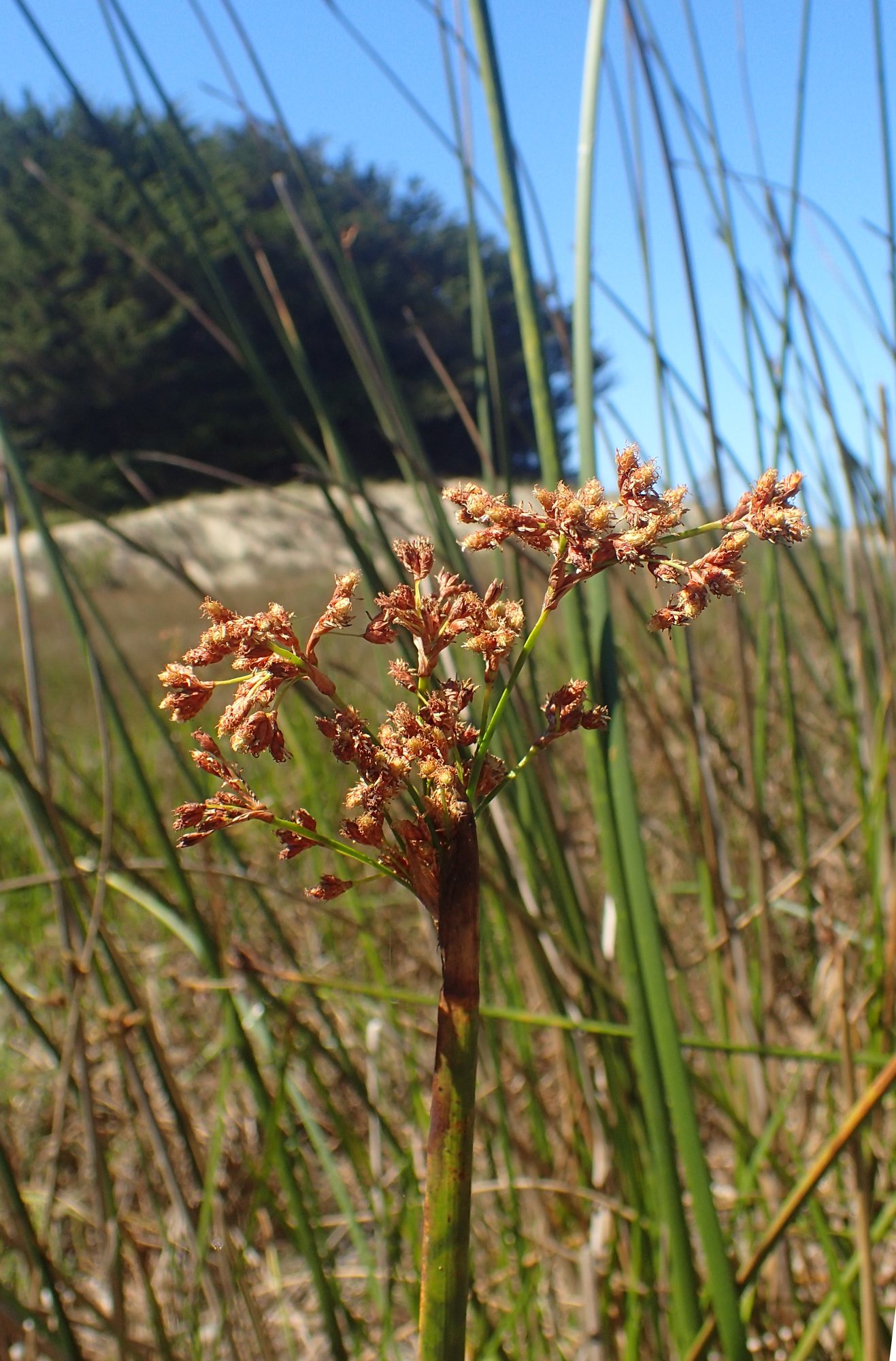
The historical account names at least two kinds of tule. One had stems that were round in cross-section, while the other had three-sided stems. The long stalks of these wetland plants were joined together to form a mat.
How the mat was constructed
Many long stems lay side by side, tied together into one broad covering. In the ethnographic account, this object is called he’sə — a mat of the Plains Miwok. Its dimensions made it suitable not only as bedding for one person but also as a large covering for an earthen floor.
How people slept
The mat was spread out on the floor, and people lay on it. In other Miwok regions, pine needles were also piled on the ground, with mats and hides spread over them. These were different approaches shaped by locally available materials: tule near wetland settlements, pine needles in mountain forests.
How it was used during the day
The same mats were spread on the floor and used as a covering for communal meals. The plant-fiber sheet served both as bedding and as an ordinary part of the living space.
Where people lived
The Plains Miwok inhabited the low, marshy lands of the Sacramento Valley and the Delta toward Stockton. Long-stemmed wetland plants grew nearby, providing material both for dwellings and for mats.
When they were used
The source describes everyday use of mats without limiting it to a particular month. People used bedding throughout the year.
Sources: S. A. Barrett and E. W. Gifford, Miwok Material Culture (1933), “Mats,” pp. 244–245 — https://www.yosemite.ca.us/library/miwok_material_culture/miwok_material_culture.pdf; “Dwellings” — https://www.yosemite.ca.us/library/miwok_material_culture/dwellings.html.